How to size a drawer box for side-mount slides
Start with the slide model and usable cabinet opening. Then calculate the box and its structural parts separately from the decorative drawer front.
Worked example: from a 600 mm opening to a 575 mm box
Suppose the slide installation sheet calls for 12.5 mm of clearance on each side. In a 600 mm clear opening, the drawer box outside width is 600 − 12.5 − 12.5 = 575 mm. If the structural front and back fit between two 16 mm side panels, cut those crosspieces to 575 − 16 − 16 = 543 mm.
The visible drawer face follows its own overlay and gap layout. The bottom panel also needs its own calculation because grooved, rebated and underside mounting methods use different allowances.
From measuring the opening to testing a drawer
Read the hardware instructions first
Confirm whether your slides are side-mount, undermount or another type. Record the installation clearances, tolerances and setback from the front. The 12.5 mm in the example applies to each side of this example setup. Recalculate when the model changes, even if its nominal length is the same.
Measure on the installation plane
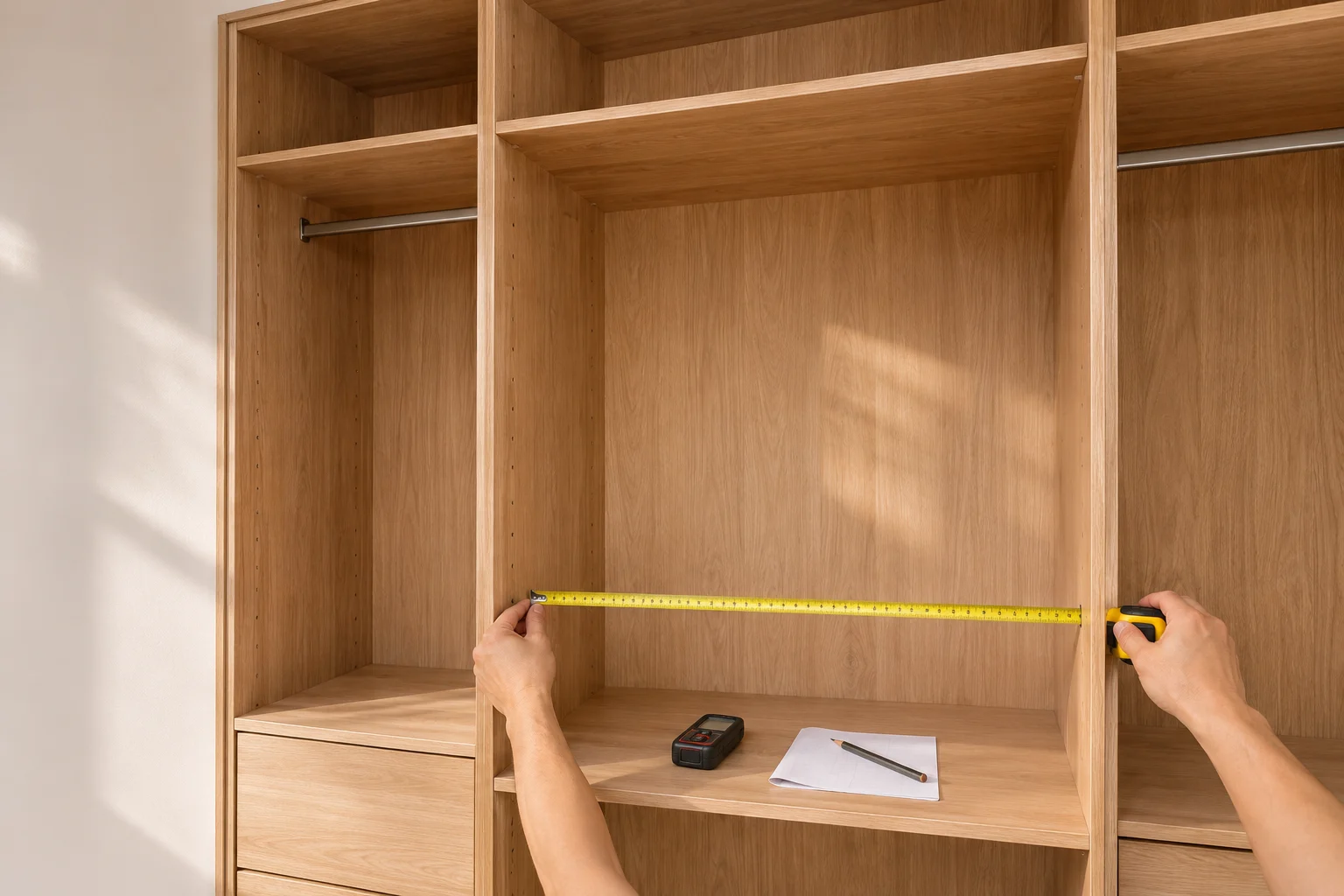
At rail height, measure the front, middle and back of the opening. If the readings are 600, 599 and 600 mm, identify the 599 mm restriction and check why it is there before cutting. The cabinet may need to be squared or shimmed.
On face-frame cabinets, check whether the slides need spacers behind the frame. The widest part of the cabinet may have little to do with where the rails actually sit.
Check depth separately from width
Usable width sets the side clearances. Usable depth constrains both the slide length and the drawer body. In a cabinet with 480 mm to work with, a 450 mm slide may fit, but confirm the front setback, mounting brackets and back panel before using the remaining 30 mm in your design.
Draw each panel as it will be assembled
Label the front and back as structural pieces. Note whether they sit between the sides or cover the ends before calculating their cut width. The 543 mm example only applies to parts fitted between the sides. Size the bottom from the actual groove or fixing detail.
Fit one drawer before cutting a batch
Verify full travel, closing position and sideways play with one test box. If it binds, compare rail height and parallelism. Check for screw heads that stand proud before reducing the box width.
Check the drawer under a representative load
Use a load similar to daily use and watch for clashes with doors, handles, dividers and adjacent drawers. Record the verified slide model, clear opening, box width and face gap with the cut list so the next matching cabinet can use the tested layout.
Drawer box and slides
Allow for slide clearance and calculate drawer box parts.